
Live casino · Baccarat
Live Baccarat Malaysia — Play Baccarat on TPOWER
Two hands, one decision: back Banker, Player or a Tie, then watch a real dealer turn the cards. Here is how live baccarat works, what the third-card rules mean and how to keep your play within a budget.
What is live baccarat?
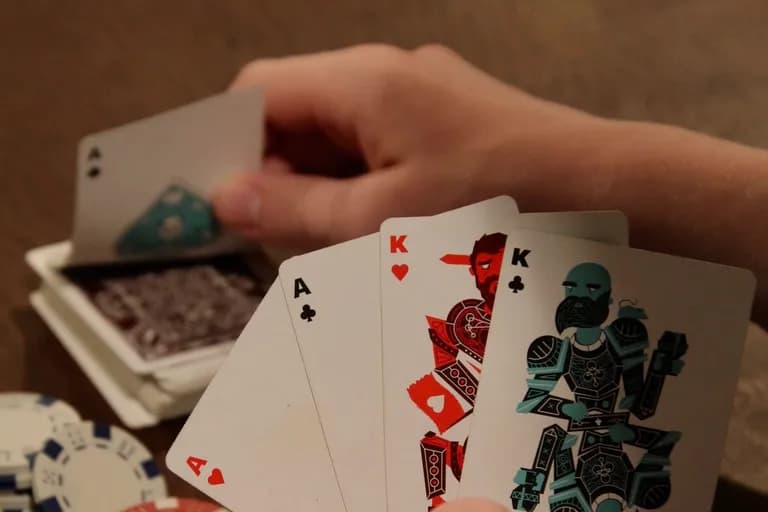
Baccarat is a card game in which you bet on which of two hands, Banker or Player, will finish closer to nine. You never play a hand or decide whether to draw: the dealer follows fixed rules, and your only choice is where to place your chips.
In live baccarat the dealing happens at a real table, streamed to your phone or computer. Cards come from a shoe of several decks, commonly eight, and every card is turned face up on camera. A timer counts down on screen; when it ends, betting closes and the round is dealt.
The TPOWER live casino brings together tables from providers such as AG, AE, CT855, Pegasus, Evolution and Dream Gaming, so the studio, layout and side bets vary while the core game stays the same.
Baccarat variants at live tables
Who wins is decided the same way in every version; what changes is the pace, the presentation and some payouts. Check each table's rules panel before you sit down.
- Classic baccarat. The standard game, with a commission, commonly 5%, taken from winning Banker bets.
- Squeeze baccarat. The dealer bends and peels the cards slowly, revealing each value a little at a time. The odds do not change; only the pace does.
- Speed baccarat. Shorter betting windows and quicker dealing, so more rounds fit into an hour and money moves faster.
- No-commission baccarat. Banker wins are paid at even money with no commission, but a Banker win on a total of six commonly pays only half. The payout panel shows the exact rule.
How to play baccarat
Card values
- Aces count as one.
- Cards two to nine count at face value.
- Tens, Jacks, Queens and Kings count as zero.
A hand is worth the last digit of its total. A seven and an eight make 15, so the hand is worth five. No hand can go above nine.
The deal and the third-card rules
The dealer gives two cards each to Player and Banker. If either hand totals eight or nine, called a natural, both stand and the round is settled.
Otherwise Player acts first: on 0 to 5 Player draws a third card, and on 6 or 7 Player stands. If Player stands, Banker follows the same rule. If Player draws, Banker's move depends on its own total and on Player's third card:
- Banker on 0, 1 or 2 always draws.
- Banker on 3 draws unless Player's third card is an 8.
- Banker on 4 draws if Player's third card is 2 to 7.
- Banker on 5 draws if Player's third card is 4 to 7.
- Banker on 6 draws if Player's third card is 6 or 7.
- Banker on 7 stands.
You do not need to memorise this: the dealer applies the rules. Knowing them simply explains why Banker wins slightly more often.
The main bets
- Player pays even money.
- Banker pays even money minus the commission, commonly 5%.
- Tie pays when both hands finish on the same total, commonly at 8 to 1. On a tie, Banker and Player bets are usually returned.
- Pair side bets pay when the first two cards of the chosen hand are a pair, at the rate shown on the table.
Playing baccarat on mobile and in the TPOWER app
Live baccarat tables are built for phones, with the betting areas under the video. Play in your mobile browser or install the TPOWER app for Android or iPhone; the download page has the install steps.
- Use a steady connection, and lower the video quality if the stream stutters.
- Bet early in the countdown; late bets are not accepted.
- Check your chip value before you tap. On a small screen, the wrong chip is an easy mistake.
- If a result looks wrong, note the table and the time and tap the support button to reach live support.
Tips: understanding the odds and setting a budget
No tip helps you beat baccarat. Every bet carries a house edge, the share of stakes the game keeps over time, so the aim is to understand each bet and play within your means.
- Know the edge on each bet. In a standard eight-deck game with a 5% commission, Banker carries a house edge of a little over 1%, and Player slightly more. The Tie, at 8 to 1, carries an edge above 14%. Side bets are usually well above Banker and Player too.
- Read the roads as history, not a forecast. Live tables show scoreboards of past results, such as the Big Road and the Bead Plate. A streak says nothing about the next hand.
- Set a budget and a time limit before you sit down, and stop when you reach either. Speed tables use up both faster.
- Keep stakes level. Raising your bet to win back a loss does not change the odds; it only makes a losing run more expensive.
- Use the tools. TPOWER offers deposit and session limits, breaks and self-exclusion. The responsible gaming page explains each one.
Baccarat is for adults aged 18 and over. For a game decided by a single card each, try dragon tiger; if you prefer a wheel, see live roulette.
Live baccarat questions
Should I bet on Banker or Player?
Neither is predictable. Banker wins slightly more often because of the drawing rules, which is why a commission, commonly 5%, is taken from Banker wins. Even so, Banker’s house edge stays slightly lower than Player’s.
What happens to my bet if the hand is a tie?
A Tie bet is paid at the table rate, commonly 8 to 1. Bets on Banker or Player are usually returned. Each table’s rules panel confirms how ties are settled.
Do I decide whether to draw a third card?
No. The third-card rules are fixed and the dealer applies them. Your only decisions are what to bet and how much, before the timer ends.
What is squeeze baccarat?
A version in which the dealer reveals the cards slowly, bending them to show the value bit by bit. The rules and odds are the same as classic baccarat; only the pace and presentation differ.
What do the roads on a baccarat table show?
Scoreboards of the results so far in the shoe, drawn in different patterns. They help you follow the game but do not predict the next hand.